Event Report: Upazila Officials Meet
Project Name: Promoting Gender Equality and Social Inclusion in Schools Building on What Children Value and Aspire to Do and Be
Event Summary
- Program Name: Local Institutional Meeting events with Upazila official in relation to project’s background, scope, and implementation
- Milestone: Identification and meeting with national/local cross-sectoral stakeholders directly/indirectly engaged in the education sector
- Date: February 19, 2025
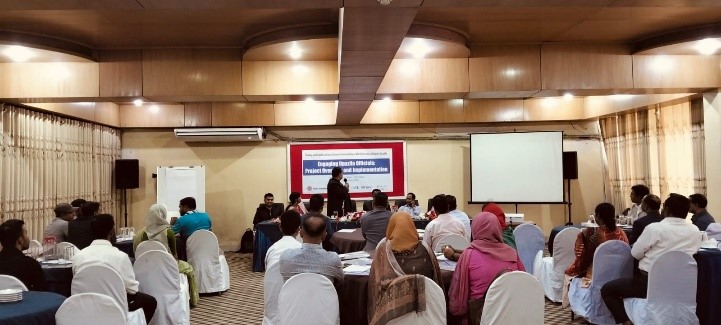
- Venue: Conference Room, Hotel Sea Palace, Cox’s Bazar
- Participants: Total 61, including 49 Males and 12 Females (District education officials, Women and Children Affairs Officials, Social Service Officials, Media representatives, Head Teacher, Social Science Teacher, I/NGO representatives, RRRP program staff, Specialist and promoting GESI project staff)
Overview
RDRS Bangladesh, a non-governmental development organization, is launching a special project aimed at Upazila officials about the project’s background, scope, and implementation and raising awareness of gender equality and creating a supportive environment for its implementation among students in eight government schools in Cox’s Bazar. On February 19, 2025, RDRS Bangladesh convened an Upazila Officials Meet at the Hotel Sea Palace in Cox’s Bazar. The event brought together 61 participants (49 Males and 12 Females), including Upazila officials, Education Officers, policymakers, educators, media representatives, and development professionals, to discuss the promotion of Gender Equality and Social Inclusion (GESI) policies in schools. The primary aim was to foster collaboration among stakeholders and enhance awareness of GESI-related challenges and opportunities in the school level.
Presentations and Speeches:
- Welcome Speech: The event began with a welcome speech and organizational introduction by Md. Nazmul Hossain, Research Associate.
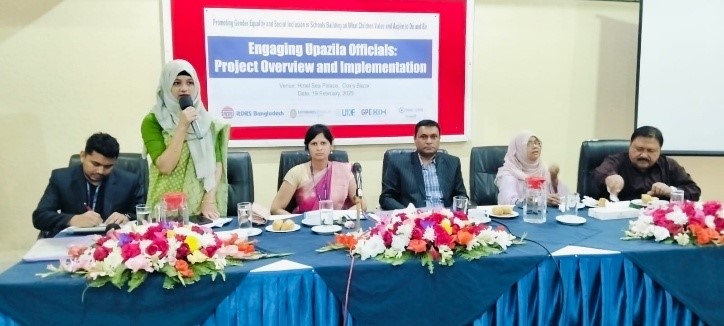
- Project Overview: Syeda Nure Nabila Tabassum, Project Manager, delivered a comprehensive discussion on the program’s objectives, emphasizing the critical role of upazila officials in addressing GESI challenges. She addressed upazila officials to collaborate for impactful outcomes.
- Coordination: Ashok Malakar, Finance and Admin Assistant, and Faisal Kader & Kamrunnesa Education Facilitator ensured seamless logistics and participant registration.
Discussion Highlights
Gender Equality and Awareness
Parents and teachers play an important part in safeguarding children’s mental health by fostering a supportive and inclusive environment. Female teachers may make a significant impact by guiding adolescent students, particularly girls, to improve their attendance and involvement in education. Additionally, raising awareness through mother-gatherings can help create a strong support system for students, ensuring their well-being. A safe and inclusive learning environment is essential, where teachers take a bold stance against eve-teasing and actively work towards preventing any form of harassment. Furthermore, raising awareness of a secure environment for women in educational institutions is vital for promoting gender equality and inclusivity.
Social Inclusion and Gender Related Support
There is a huge scope for social inclusion as disabled peoples and others by social service office discussed at this stage. Gender equality-related services are provided by social service offices in Bangladesh. This discussion is highly related to this project goal. Individual teachers in every school promised to take necessary action further this kind of problems when arise.
Environmental Protection and Sustainable Development
Sustainability and environmental protection are critical to creating a better future. Initiatives to reduce plastic and polythene can significantly reduce environmental hazards, ensuring a cleaner and healthier ecosystem. A notable step towards sustainability is implementing the use of glass jugs and glasses in all primary schools, which can help minimize plastic waste and promote eco-friendly practices among young students. These strategies contribute to a sustainable development approach that promotes both the environment and future generations.
Principals and teachers of 8 government schools attended the meeting. They identified the problems of their respective schools and put forward the necessary recommendations to solve them. Through this meeting, an effective link has been established between the education administration and schools at the upazila level. Such programs will play an important role in the development of educational institutions in the future.
Guest Reflections in Brief
Speaking at the event, Chief Guest District Primary Education Officer Shaheen Miah emphasized the significance of the project, stating, “It is critical to ensure gender equality and a safe environment for students. This project will bring a positive impact on the education system.” His remarks underscored the project’s potential impact on fostering an inclusive and secure learning environment.
The event was gathered by several special guests, including Subrata Das, Deputy Director of District Women Affairs; Mohammad Sajjad, Assistant District Primary Education Officer; Gulshan Ara, Assistant District Primary Education Officer; and Sajia Afrin, City Social Service Officer. The event was moderated by Md. Nazmul Hossain, Research Associate of RDRS Bangladesh, while Project Manager Syeda Nure Nabila Tabassum presented the project’s summary and implementation strategy, providing insights into its objectives and execution strategy.
The meeting produced several key results and recommendations. Special programs should be implemented to ensure gender equality and social inclusion within educational institutions. Furthermore, a collaborative effort involving parents, teachers, and the administration is essential to prevent eve-teasing and create a safer environment for students. Promoting environmental awareness among students was also highlighted as an important initiative. Education officials committed to taking effective steps to enhance facilities for school students, ensuring a more conducive learning atmosphere.
Head teachers and teachers from eight government schools participated in the meeting, identifying challenges faced by their respective institutions and proposing necessary solutions. This discussion helped establish a stronger connection between the education administration and schools at the upazila level. Such initiatives are expected to play a pivotal role in the future development of educational institutions, fostering long-term improvements in the education system.
Conclusion
The Upazila Officials Meet successfully brought together diverse stakeholders to discuss GESI policies in education. The insights and commitments shared during the event underscored the importance of a collaborative approach to fostering gender equality and social inclusion. RDRS Bangladesh will continue to work closely with Upazila officials, teachers, and community leaders to implement the actionable insights from this meeting and drive meaningful change in schools.