
Narrative Report: Local-Level Education Stakeholders Meet
Project Name: Promoting Gender Equality and Social Inclusion in Schools Building on What Children Value and Aspire to Do and Be
Event Summary:
Reported By: Md. Nazmul Hossain
Name of the Program: Local-Level Education Stakeholders Meet
Milestone 2: Local Level Education Stakeholders Meet: Initial dialogues with local level key stakeholders (Personals of NGOs working with children, municipality heads, school headmasters, teachers and parents)
District: Cox’s Bazar
Date of the meeting: 9th October 2024
Place: Conference room, Ukhiya, Cox’s Bazar
Number of participants: Total – 21 (Male: 17; Female: 04)
Chief Guest: Honorable Upazila Nirbahi Officer(UNO), Ukhiya
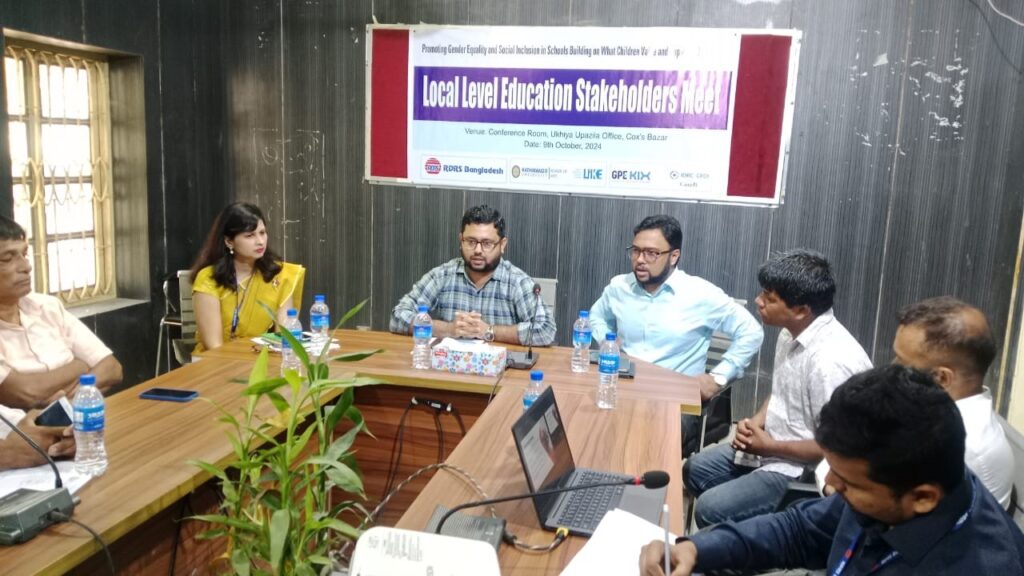
RDRS Bangladesh, a non-governmental development organization arranged a significant meeting titled Local Level Education Stakeholders Meet On 9th October 2024, in Ukhiya conference room, gathering 21 key stakeholders and office staff, including Upazila Nirbahi Officer, Assistant Commissioner (Land), school headmasters, NGO personnel working with children as IOM officer and Dushtha Shasthya Kendra (DSK) officer, social science teachers, and parents. Out of the 21 participants, 4 were female, and 17 were male, representing a diverse group concerned with the future of education in the region.
The event opened with a warm welcome from the Project Manager, who set the tone for the discussions. The welcome speech underscored the importance of collaboration among all stakeholders to improve the quality of education in the local communities.
The Research Associate led the presentation session and shared an introduction about RDRS Bangladesh, information about GESI in the Bangladeshi context, findings relevant to the local educational context, and the importance of local-level education stakeholders in this project. This presentation served as a basis for constructive discussion among the participants, fostering a collaborative environment where ideas were freely exchanged. Increased awareness of the importance of stakeholders.
Guest Intervention in Brief
The event was marked by the presence of Chief Guest Upazila Nirbahi Officer Tanvir Hossain, who delivered an insightful speech highlighting the importance of research in educational advancement. He emphasized the necessity of adhering to established rules and regulations, ensuring that any research or dialogues translate into real, tangible outcomes that can be implemented effectively. He encouraged the stakeholders to look at schools as potential role models, particularly for those selected for their exemplary efforts. According to him, schools should reflect positive changes, demonstrating leadership in addressing local educational challenges.
The Upazila Education Officer Muktar Ahammed advised all stakeholders to cooperate. Several head teachers discussed the difficulties they face in their schools. A significant portion of the conversation revolved around Gender Equality and Social Inclusion (GESI) issues, with the head teachers pointing out how these matters influence both the learning environment and the engagement of students. Additionally, other operational problems, such as infrastructure gaps and resource shortages, were also brought to the table, contributing to a holistic view of the challenges faced at the school level. NGO officials provide their thoughts on how it may be improved.
In summary, the Local Level Education Stakeholders Meet provided an essential platform for stakeholders to voice their concerns, share their experiences, and brainstorm actionable solutions to improve education in the region. The involvement of a wide range of stakeholders ensured that the dialogue was comprehensive and addressed various aspects of the educational ecosystem. The commitment to implementing research-based outcomes and tackling pressing issues like GESI underscored the meeting’s forward-looking approach.
Meeting Highlights:
Purpose and Objectives:
The meeting aimed to foster collaboration among key stakeholders to improve educational outcomes in Ukhiya.
Emphasis on addressing the challenges faced by children in accessing quality education.
Diverse Participation:
Attendance included 21 stakeholders, comprising NGO personnel, Upazila Nirbahi Officer, school headmasters, teachers, and parents.
Notable gender representation: 4 female and 17 male participants, highlighting the need for increased female involvement in education discussions.
Key Issues Identified:
Access to Education: Challenges faced by children in remote areas and marginalized communities.
Quality of Education: Concerns about the quality of teaching and available resources in schools.
Teacher Training: Need for continuous professional development and training for educators.
Stakeholder Contributions:
Participants shared insights on local educational practices, highlighting successes and areas needing improvement.
Parents emphasized their role in supporting children’s education and the importance of community involvement.
Actionable Solutions:
Proposals for community engagement initiatives to raise awareness about the importance of education.
Suggestions for capacity-building workshops for teachers and staff to enhance teaching methods.
Future Collaboration:
Commitment from stakeholders to collaborate on education projects and share resources.
Discussion on establishing a regular platform for stakeholders to continue dialogue and monitor progress.
Photo of local-level education stakeholders meet
