Event Report: Policy Makers Meet
Project Name: Promoting Gender Equality and Social Inclusion in Schools Building on What Children Value and Aspire to Do and Be
Event Summary
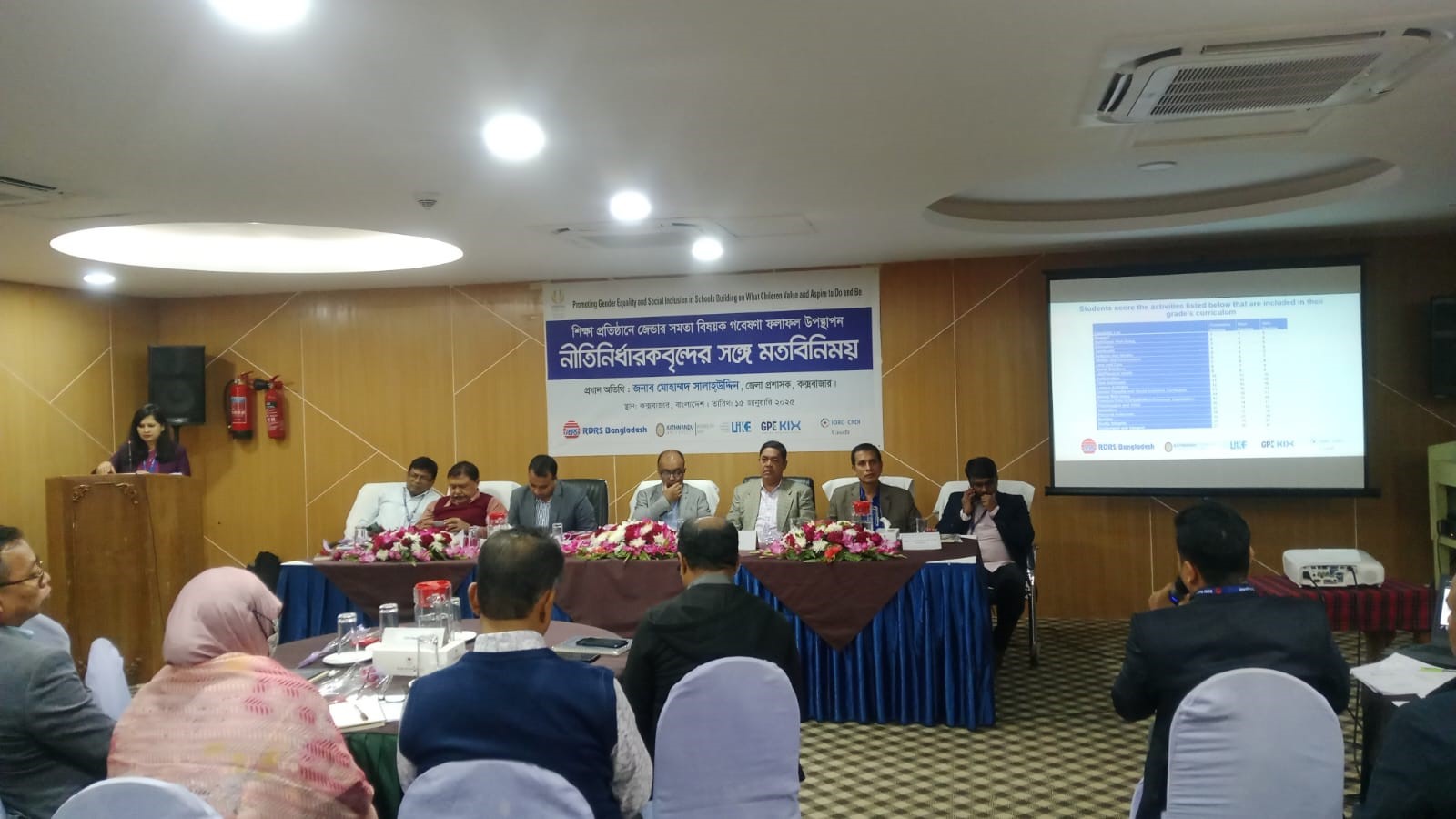
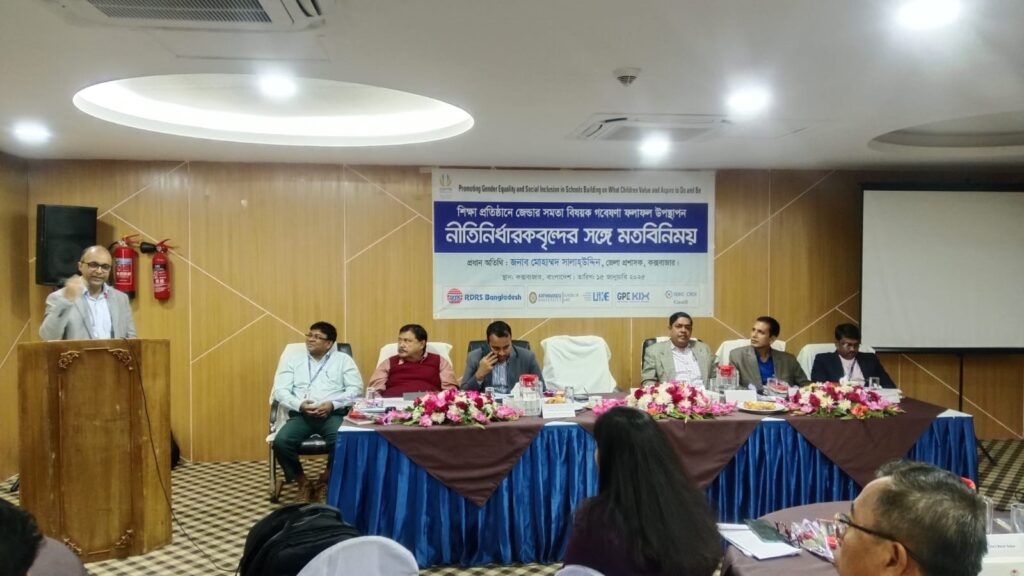
- Program Name: Policy Makers Meet: Policymakers and GESI experts in educational research come together to discuss GESI Policy
- Milestone: Identification and meeting with national/local cross-sectoral stakeholders directly/indirectly engaged in the education sector
- Date: January 15, 2025
- Venue: Conference Room, Hotel Sea Palace, Cox’s Bazar
- Participants: Total 58 including 46 Males and 12 Females (Deputy Commissioner, District education officials, Media representatives, Head Teacher, Social Science Teacher, I/NGO representatives, RRRP program staff, and Promoting GESI project staff)
- Key Guest: Deputy Commissioner, Cox’s Bazar
Overview
RDRS Bangladesh, a non-governmental development organization, is launching a special project aimed at raising awareness of gender equality and creating a supportive environment for its implementation among students in eight government schools in Cox’s Bazar. On January 15, 2025, RDRS Bangladesh convened a Policy Makers Meet at the Hotel Sea Palace in Cox’s Bazar. The event brought together 58 participants (46 Males, 12 Females), including policymakers, educators, media representatives, and development professionals, to discuss the promotion of Gender Equality and Social Inclusion (GESI) policies in schools. The primary aim was to foster collaboration among stakeholders and enhance awareness of GESI-related challenges and opportunities in the education sector.
Presentations and Speeches:
- Welcome Speech: The event began with a welcome speech and organizational introduction by Team Leader Md. Ashraful Alam.
- Project Presentation: Syeda Nure Nabila Tabassum, Project Manager, delivered a comprehensive presentation on the program’s objectives, emphasizing the critical role of NGOs in addressing GESI challenges. She urged policymakers to collaborate for impactful outcomes.
- Research Findings: Md. Nazmul Hossain, Research Associate, shared findings from RDRS Bangladesh’s situational analysis on school environments, highlighting GESI-related gaps and opportunities.
- Coordination: Ashok Malakar, Finance and Admin Assistant and Chandona Barua, CM, RRRP ensured seamless logistics and participant registration.
Discussion Highlights
- Policymaker Insights:
Deputy Commissioner emphasized equitable education as key to societal progress, while education officials stressed starting gender equality at home and improving school infrastructure. - Curriculum Reform:
District Education Officer highlighted the need for embedding ethics and gender equality in education, despite challenges. - Media’s Role:
Press Club President called for media advocacy to combat discrimination, end violence against women, and raise GESI awareness. - NGO Contributions:
NGOs emphasized fostering gender-sensitive schools, preventing child marriage, and promoting girls’ education and empowerment. - Collaboration:
Stakeholders advocated for actionable strategies, inclusive infrastructure, and community engagement to address GESI challenges.
Guest Reflections in Brief
- Deputy Commissioner Mohammad Salahuddin
The Deputy Commissioner emphasized that societal attitudes toward women are influenced by a complex interplay of factors, including gender, age, education, socio-economic status, and power dynamics. He noted that these attitudes are deeply rooted in cultural norms, historical contexts, and institutional structures, which often perpetuate inequalities. The Deputy Commissioner stressed the urgent need for an inclusive and equitable education system, arguing that it serves as a cornerstone for societal progress. He highlighted that by promoting access to quality education for all, regardless of gender or background, societies can foster greater understanding, reduce discrimination, and build more just and progressive communities.
- District Primary Education Officer Md. Shaheen Mia
He advocated for the inclusion of hygiene corners in school infrastructure, understanding their importance in maintaining student health and cleanliness. He also stressed the significance of gender equality beginning within families, underlining the role of equitable behavior at home in shaping future generations. Additionally, he recognized the contributions of NGOs in promoting environmental awareness through education, appreciating their efforts in inspiring sustainable practices and community action.
- District Education Officer Ram Mohan Sen
District Education Officer Ram Mohan Sen acknowledged the significant challenges involved in curriculum reform, but he emphasized the long-term benefits it would bring to national development. He also highlighted the importance of embedding gender equality and ethics into the social fabric, underscoring that these values must be nurtured from an early age to foster a more inclusive and harmonious society.
- Press Club President Md. Mahbubur Rahman
Press Club President Md. Mahbubur Rahman called for family counseling, awareness campaigns, and publications to promote gender equality, emphasizing the importance of situational analysis and research. He advocated for the media to combat discrimination, end violence against women, and empower women. He also urged the involvement of religious and community leaders in spreading GESI awareness.
- Head of Social Development Md. Mujibul Haque Munir
Head of Social Development Md. Mujibul Haque Munir highlighted the significance of the project and its research initiatives, underlining their importance in driving impactful change. He discussed the current curriculum, emphasizing its role in shaping societal values and influencing the community. In his closing remarks, he stressed the importance of collaboration, encouraging all parties to work together for future success and sustained progress.
Conclusion
The Policy Makers Meet successfully brought together diverse stakeholders to discuss GESI policies in education. The insights and commitments shared during the event underscored the importance of a collaborative approach to fostering gender equality and social inclusion. RDRS Bangladesh will continue to work closely with policymakers, educators, and community leaders to implement the actionable insights from this meeting and drive meaningful change in schools.